
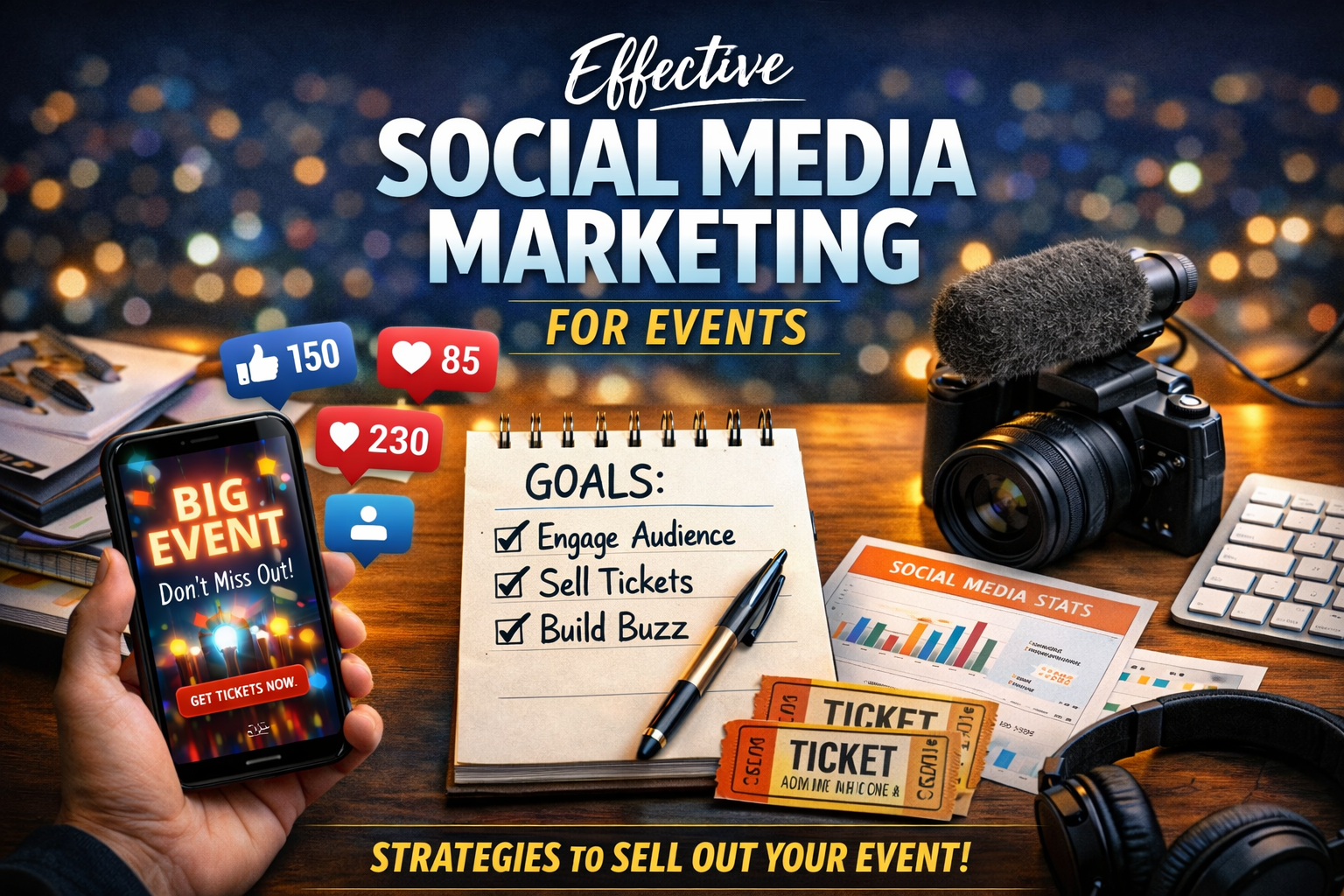
Effective Social Media Marketing for Events: A Simple Guide to Selling Out
Effective Social Media Marketing is the key to turning social media posts into real event success. Many event organizers spend hours posting online but still struggle to sell tickets. With the right plan, Effective Social Media Marketing can help your event stand out and reach the right people.
This guide breaks down social media marketing into simple steps. You will learn how to set goals, connect with your audience, create strong content, and track your results to improve future events.
1. Start with Clear Goals and the Right Audience
Before posting anything, you need to know two things: what you want to achieve and who you want to reach. This step saves time and helps every post have a clear purpose.
Set Clear Goals
Most events focus on three main goals:
- Boost Engagement
Track likes, comments, and shares to see how people interact with your posts. - Raise Awareness
Measure reach to find out how many people are seeing your content. - Sell Tickets
Track sign-ups and purchases that come from social media.
Clear goals make it easier to see what is working and what is not.
Know Your Ideal Attendee
Understanding your audience helps you create content they care about.
Focus on:
- Age, location, and gender
- Interests and hobbies
- Social media platforms they use
- Similar events they already follow
You can gather this info through surveys or social media insights.
2. Build a Strong Brand Identity
A strong brand makes your event easy to recognize. When people see your post, they should know it’s yours right away.
Key elements of branding include:
- Tone of Voice
Decide how you speak. Is your event fun and casual or formal and professional? - Visual Style
Choose colors, fonts, and images that match your event’s mood. - Key Messages
Share what makes your event special and why people should attend.
Consistency builds trust and keeps your event memorable.
3. Create Content for Every Stage of the Funnel
People don’t buy tickets right away. They move through stages before making a decision.
Awareness Stage
This is where people first hear about your event.
- Use eye-catching images
- Share short teaser videos
- Create posts that spark curiosity
Consideration Stage
Now people are deciding if your event is worth it.
- Share speaker previews
- Post behind-the-scenes content
- Highlight what attendees will learn or gain
Conversion Stage
This is where people buy tickets.
- Share clear calls-to-action
- Offer early-bird discounts
- Post ticket links often
4. Create Buzz and Urgency
Excitement helps people act faster.
Use Teasers and Behind-the-Scenes Content
Show event prep, planning, and sneak peeks. This builds anticipation and feels personal.
Create Urgency
- Offer limited-time discounts
- Release speaker announcements one at a time
- Set deadlines for bonuses or physical items
Share Past Event Videos
Short recap videos show energy and excitement. They help people imagine being there.
Run Contests
Give away free tickets or VIP perks. Ask people to tag friends or share posts to enter.
5. Reach New Audiences
To sell out, you need to reach people beyond your followers.
Influencer Marketing
Partner with trusted influencers who share your target audience. Make sure their followers are real and engaged.
Affiliate Programs
Reward fans for selling tickets for you. Offer prizes or commissions to keep them motivated.
Email Marketing
Email gives you direct access to your audience. Share helpful content often and promote your event when the time is right.
6. Track Results and Improve
Social media marketing works best when you learn from your data.
- Check which posts get the most engagement
- Track where ticket sales come from
- Compare influencer, email, and ad performance
Use these insights to improve your next campaign.
7. Promote Your Next Event at Your Live Event
Your best buyers are already in the room.
- Offer early-bird tickets before the event ends
- Follow up with a discount email after the event
This can help you sell 15–20% of tickets early with little effort.
Conclusion: Turn Strategy into Success
A sold-out event comes from planning, not luck. With clear goals, strong branding, smart content, and ongoing analysis, social media can become your most powerful marketing tool.
Use these strategies with consistency and creativity, and your next event will have the attention—and ticket sales—it deserves.